

Title: Resilience in Crisis: How the UAE and Gulf States Recalibrate Oil Exports Amidst Geopolitical Turbulence
Keywords: UAE, oil exports, IEA, Strait of Hormuz, geopolitical tensions, global energy market, pipeline infrastructure, supply chain resilience
Introduction
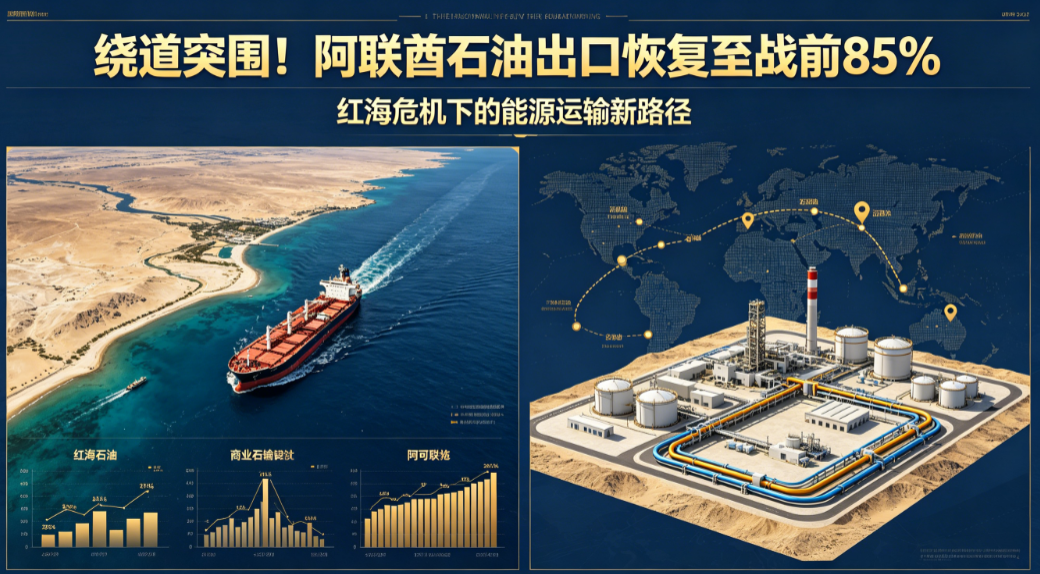
The global energy landscape is a delicate ecosystem, profoundly sensitive to the slightest geopolitical tremors. When the specter of major conflict emerges, the immediate assumption is one of severe supply disruption and market chaos. Yet, the aftermath of the recent tensions between the United States and Iran has painted a more nuanced picture. According to a comprehensive report by the International Energy Agency (IEA), the United Arab Emirates (UAE), the world’s seventh-largest oil producer, has demonstrated remarkable logistical resilience. By early June, its crude oil exports had rebounded to approximately 85% of pre-conflict levels, a feat achieved not through diplomatic resolution alone, but through the strategic utilization of alternative infrastructure and shipping routes. This article delves into the mechanisms of this recovery, exploring the infrastructure, geopolitical calculus, and market implications of a region forced to adapt overnight to a new, perilous reality.
The Anatomy of a Supply Shock
The crisis, ignited by a military confrontation between Iran and the United States, led to the immediate, de facto blockade of the Strait of Hormuz. This narrow waterway, a chokepoint for roughly 20 million barrels per day (bpd) of global energy traffic before the conflict, became a no-go zone. The IEA report, authored by Toril Bosoni, David Martin, and Rebecca Schulz, details the devastating initial impact. In March, immediately following the outbreak of hostilities, UAE oil exports plummeted to a mere 1.9 million bpd. The supply chain was severed.
This shock was not confined to the UAE. The IEA estimates that cumulative oil supply losses for Middle Eastern producers exceeded 1.3 billion barrels over the first few months of the conflict. Energy flows through the Strait of Hormuz dropped from 20 million bpd to an average of just 2.7 million bpd across March, April, and May. The global market scrambled for stability, facing the immediate prospect of a severe supply squeeze.
The UAE’s Strategic Infrastructure: A Lifeline Beyond the Strait
The key to the UAE’s rapid recovery lies in its foresight in developing independent infrastructure. While many nations were paralyzed, the UAE utilized a pre-existing asset: the 380-kilometer Habshan-to-Fujairah pipeline. This pipeline connects the Habshan production center to the Fujairah port on the Gulf of Oman, effectively bypassing the Iranian-controlled Strait of Hormuz entirely.
This pipeline, with a capacity of approximately 1.8 million bpd, became the primary artery for the nation’s oil exports. It allowed the UAE to continue fulfilling contracts to its customers, providing a critical sense of stability. Complementing this pipeline is the massive 42-million-barrel Mandus underground storage facility, located near Fujairah. This strategic reserve provided a buffer, allowing the UAE to manage production fluctuations and dispatch cargoes without the logistical bottlenecks at the loading terminals.
The IEA analysts highlighted that the UAE’s ability to "maintain relatively high export levels" during severe disruptions was a direct result of these investments. It was not a lucky break, but a calculated, long-term strategy that paid off dramatically during the crisis.
Saudi Arabia’s Parallel Response
The UAE was not alone in its strategic pivot. Saudi Arabia, the world’s largest crude oil exporter and the Arab world’s largest economy, also executed a significant logistical shift. The kingdom dramatically increased the flow through its East-West pipeline, which circumvents the Strait of Hormuz by transporting crude from the eastern oil fields to the Yanbu port on the Red Sea.
Data from the IEA shows that Saudi exports from Yanbu surged from a pre-conflict level of 2.0 million bpd to over 5.0 million bpd by early June. This massive increase not only compensated for the loss of Hormuz traffic but also provided a critical safety valve for the global market. It demonstrated that even the most powerful oil state must constantly diversify its export routes to mitigate systemic risks.
The Interplay of Diplomacy and Market Realities
The recovery in flows was also catalyzed by a diplomatic breakthrough. The United States and Iran signed a memorandum of understanding (MoU) just days before the report was released. This agreement, still under negotiation with a 60-day deadline for a permanent peace deal, eased the immediate crisis. It signaled a potential return to relative stability in the region.
However, the IEA analysis cautions against premature optimism. While the MoU facilitated a recovery in global oil and gas flows, analysts warn that it will take months for supply to return to pre-conflict levels. The return of tanker traffic, the rebuilding of insurance markets, and the restoration of customer confidence are not instantaneous processes. The market is now in a state of “extreme unpredictability,” as the IEA puts it, with every development holding the potential for a sharp swing in prices.
A Permanent Shadow on Global Energy Markets
Despite the diplomatic progress, the IEA concludes that the conflict has left an indelible mark. The report notes that the peace talks remain “highly uncertain,” and the region is “extremely difficult to predict.” The shock to the system has forced both producers and consumers to reassess their supply chain resilience.
The use of alternative routes and stockpiles, while successful in this instance, is not a cost-neutral solution. It introduces new costs, new risks, and new logistical complexities. The long-term implications for the global energy market are profound:
- Increased Volatility: The reliance on fragile chokepoints will continue to create price spikes during crises.
- Infrastructure Investment: Nations will now prioritize infrastructure that can bypass volatile straits, likely leading to more pipelines and storage facilities in safer harbors.
- Shifting Market Dynamics: The crisis has accelerated a trend towards more diversified energy supply, benefiting producers with flexible export infrastructure.
Conclusion: Beyond the Strait of Hormuz
The story of the UAE’s oil export recovery is a case study in strategic resilience. By leveraging a pre-existing pipeline and a vast storage facility, the UAE managed to navigate a catastrophic geopolitical event and restore nearly 85% of its export capacity within a few months. Saudi Arabia’s parallel response further stabilized the market. Yet, the shadow of the Strait of Hormuz remains a permanent fixture of the global energy landscape.
The IEA’s final assessment is stark: “Even if the reopening of the Strait of Hormuz proceeds smoothly, this Middle East conflict will leave a permanent shadow over the global energy market.” This crisis has served as a jarring reminder that energy security is not just about reserves, but about the infrastructure and diplomatic finesse required to get those reserves to market. As the world watches the fragile peace negotiations unfold, one thing is clear: the geopolitics of oil will never be the same again. The age of relying on a single, vulnerable chokepoint is over, replaced by a more complex, fragmented, and ultimately more volatile era of global energy supply.
Copyright Notice: This article is original content of Dhaka Bullion. Please contact us for republication permission.