

Title: Sunrun Soars on Landmark Partnership with Tesla and Renew Home: A New Era of Distributed Energy for AI Data Centers and Utilities
Keywords: Sunrun, Tesla, Renew Home, distributed energy resources, virtual power plant, AI data centers, grid flexibility, 16 GW, residential solar, smart thermostats
Introduction
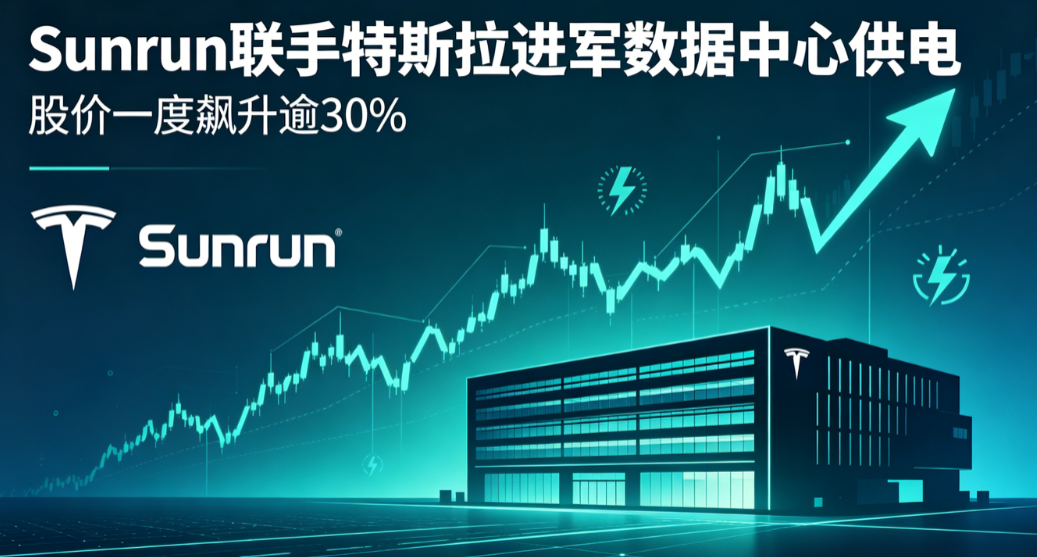
In a moment that encapsulates the convergence of artificial intelligence, renewable energy, and grid modernization, American residential solar giant Sunrun saw its stock surge over 31% on June 24, reaching its highest level since March. The catalyst? A groundbreaking three-way agreement among Sunrun, Tesla, and the home energy management platform Renew Home, designed to deliver more than 16 gigawatts (GW) of "flexible energy capacity" to hyperscale data centers and utility companies. This partnership, announced via a comprehensive press release, represents a paradigm shift in how the rapidly growing power demands of the AI revolution can be met without building massive new centralized power plants—by instead unlocking the latent potential of millions of distributed, residential energy assets.
The announcement comes at a critical juncture. The booming AI industry, with its insatiable appetite for computation, is driving an unprecedented surge in electricity demand. Data centers are scrambling for reliable, round-the-clock power, while the aging U.S. electrical grid—built for a very different era—struggles to keep pace. Simultaneously, the transition to renewable energy sources, while essential, introduces variability and intermittency that strain grid stability. In this context, the Sunrun-Tesla-Renew Home initiative offers a compelling, "no-regrets" solution: a virtual power plant (VPP) that can be activated on demand, using assets already installed in people's homes. This article delves into the mechanics, strategic implications, and broader significance of this deal, analyzing why it represents a potential watershed moment for the energy industry.
The Deal: 16 GW of Aggregated Home Energy Intelligence
At its core, the agreement is a framework for aggregating three distinct but complementary categories of behind-the-meter assets: Sunrun’s fleet of residential solar-plus-storage systems, Tesla’s widely deployed Powerwall home batteries, and Renew Home’s massive network of eight million smart thermostats across the United States. Together, these create a "localized turnkey solution" that requires no additional hardware, software, interconnection, water, or land from the end customer—the data center or utility. The platform will make this 16 GW of flexible capacity available on a "first-come, first-served" basis to AI data center developers, and simultaneously offer firm capacity to the largest wholesale electricity market in the U.S., PJM Interconnection LLC.
This is not merely an incremental advance in demand response. It is a recognition that the grid of the future must be dynamic, bidirectional, and deeply integrated with the built environment. Sunrun CEO Mary Powell framed the significance starkly: "A 19th-century grid cannot meet the needs of a 2026 innovation economy. When a data center needs to reduce its load during the most expensive and stressful hours of the day, we can fire up a distributed power plant to give them the electricity they need, while sparing American households from paying for expensive new infrastructure." This statement directly challenges the conventional wisdom that meeting exponential demand growth necessitates building more natural gas plants, substations, and transmission lines. Instead, the partnership leverages existing residential assets to provide the same service—often faster, cheaper, and with zero emissions.
The Three Pillars: Sunrun, Tesla, and Renew Home
Understanding the deal requires appreciating the unique strengths each partner brings. Sunrun is the largest residential solar installer in the United States, with a vast base of customers who own or lease solar panels paired with battery storage (often using Tesla’s Powerwall). This fleet can be orchestrated to discharge stored solar energy back to the grid during peak periods, providing instantaneous capacity. Sunrun’s business model, increasingly focused on "solar-as-a-service" and grid services, makes it a natural aggregator of residential flexibility.
Tesla, of course, is the dominant player in residential energy storage with its Powerwall product. While Tesla also operates its own energy projects and the Autobidder software platform, the collaboration signals a strategic decision to work with third-party partners to maximize the value of its installed base. Tesla’s contributions to the 16 GW platform include the tens of thousands of Powerwalls already installed in homes through its own sales and those bought by Sunrun customers. This cooperation between two companies that are often competitors in the residential solar and storage market underscores the scale of the opportunity.
Renew Home, formerly known as OhmConnect and now owned by the same venture capital firm that backs Sunrun, brings the thermostat network—eight million intelligent devices that can adjust heating and cooling loads in real time. While thermostats cannot generate electricity, they can shift or curtail demand, acting as a "negative megawatt" that is often the cheapest and most sustainable form of capacity. By combining battery discharge with load reduction, the platform can deliver highly reliable, fast-responding flexibility that mimics a traditional gas peaker plant.
The Data Center Crisis and the Need for Flexible Capacity
The partnership directly addresses a structural problem in the U.S. electricity system: the grid is built to meet only a few hundred hours of peak demand each year, resulting in massive amounts of generation capacity lying idle 90% of the time. AI data centers, with their hyperscale computing demands and high utilization rates, are exacerbating this peak problem. They require constant, reliable power, often in regions where grid capacity is already constrained. Traditional solutions—building new gas-fired plants or long-distance transmission lines—are slow, expensive, and face permitting hurdles.
The Brattle Group report cited by Sunrun highlights a more efficient path: increasing the utilization of the existing grid. The report estimates that optimizing the use of current infrastructure, including demand-side resources, could save U.S. consumers between $110 billion and $170 billion in electricity costs over the next decade, while also accelerating the interconnection of new data centers. The Sunrun-led platform embodies this principle. Instead of requiring data centers to wait years for new power infrastructure, the platform can provide capacity within months, using assets that are already paid for by homeowners and sitting idle for much of the day.
Critically, the platform benefits all three parties: data centers get cheaper, faster-available power; utilities avoid the cost and risk of building new plants; and homeowners receive compensation (through lower bills or direct payments) for allowing their batteries and thermostats to be dispatched. Sunrun’s CEO called this a "triple win" for customers, communities, and the economy.
Financial and Market Implications
The immediate market reaction—Sunrun’s stock surging more than 31%—signals that investors see this deal as transformative for the company’s business model. Historically, Sunrun has derived most of its value from installing and financing solar systems. The grid services revenue from VPPs has been an add-on. This deal, however, positions Sunrun as a critical infrastructure provider to the most demanding sector of the economy: AI and data centers. If successful, it could unlock a massive, recurring revenue stream that is less dependent on the vagaries of residential solar installation volumes.
Moreover, the partnership with Tesla and Renew Home validates the concept that distributed energy resources (DERs) can compete head-to-head with centralized generation. The 16 GW figure is staggering—it is roughly equivalent to the capacity of 16 large nuclear reactors, or dozens of natural gas plants. By aggregating these resources, the three companies create a product that grid operators and data center developers can trust as a firm, dispatchable resource. This could attract investment from infrastructure funds and even utilities themselves, who might pay to "reserve" a portion of this capacity.
For Tesla, the arrangement reinforces the value proposition of its Powerwall and its energy business, which Elon Musk has long argued will eventually exceed the automotive side. For Renew Home, it demonstrates the utility-scale value of smart thermostats, which are often undervalued because they are small and dispersed.
Challenges and Potential Hurdles
No ambitious plan is without obstacles. First, the technical challenge of coordinating tens of thousands of residential batteries and millions of thermostats in real time is immense. The platform must ensure that when a data center needs to reduce its load, the aggregated response is predictable, reliable, and fast enough to meet the stringent requirements of wholesale markets like PJM. Latency, communication failures, and privacy concerns all need to be addressed.
Second, regulatory and market design issues remain. Most U.S. wholesale electricity markets were not designed with large-scale aggregation of residential DERs in mind. Tariffs, performance payments, and interconnection standards will need to evolve to fully accommodate this model. While PJM has been a leader in demand response, the scale of this proposal may require new rules.
Third, the "first-come, first-served" allocation mechanism for data center developers could lead to competition and price volatility. If multiple hyperscale developers vie for the same capacity, how will it be rationed? Moreover, the capacity is not always available: it depends on solar generation, battery charge levels, and household behavior. While the platform claims it can be dispatched predictably, the inherent variability of renewable generation means that backup plans (such as retaining some gas generation) may still be necessary.
Finally, there is the consumer acceptance angle. Homeowners who agree to participate must be comfortable with their devices being controlled remotely. Clear compensation structures, opt-out provisions, and data privacy safeguards will be critical to maintaining trust and participation.
Conclusion: A Blueprint for the Decarbonized Grid of the Future
The Sunrun-Tesla-Renew Home partnership is far more than a stock-moving headline. It represents a concrete, large-scale demonstration that the grid of the 21st century can be built from the bottom up—by networking millions of small, intelligent, clean energy devices into a powerful, flexible, and cost-effective platform. By targeting the most pressing energy challenge of our time—powering the AI revolution with minimal new infrastructure—the deal offers a blueprint for how to reconcile the competing demands of economic growth, climate action, and grid reliability.
As Mary Powell's quote reminds us, the old model of building ever-larger centralized plants is no longer fit for purpose. The future lies in distributed intelligence, aggregation, and participation. If this 16 GW platform succeeds, it could pave the way for even larger, more ambitious VPPs across the country, turning homes into the power plants of tomorrow. For Sunrun, the stock surge is just the beginning; the real payoff will come if the partnership transforms the architecture of America's electricity system, one battery and one thermostat at a time.
Copyright Notice: This article is original content of Dhaka Bullion. Please contact us for republication permission.

