

Robinhood Chain: Bridge between Traditional Finance and DeFi, or a New Speculative Feast?
On July 1, 2026, the well-known US trading platform Robinhood officially launched its self-developed Ethereum Layer 2 network, Robinhood Chain. Positioned as a blockchain for financial services and real-world assets (RWA), it quickly attracted market attention upon launch due to its vast user base and unique strategic positioning. According to a report by Bernstein on July 13, its DEX trading volume over the past seven days had surged to approximately $3.1 billion, once ranking among the top five globally. However, beneath the surface of prosperity lies a more complex narrative: early trading volume is primarily driven by Meme coins, while the officially envisioned RWA applications are still in their infancy. This article will delve into the positioning, technology, core products, current ecosystem, and potential risks of Robinhood Chain from ten key dimensions.
1. What is Robinhood Chain: An Atypical Layer 2
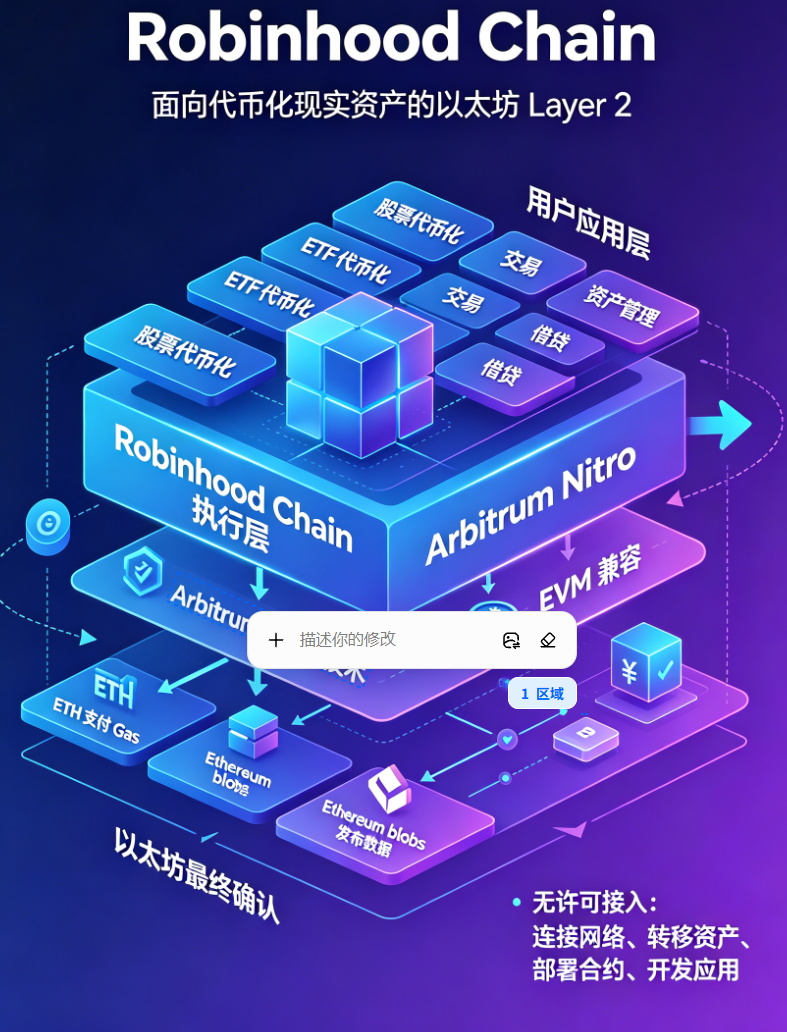
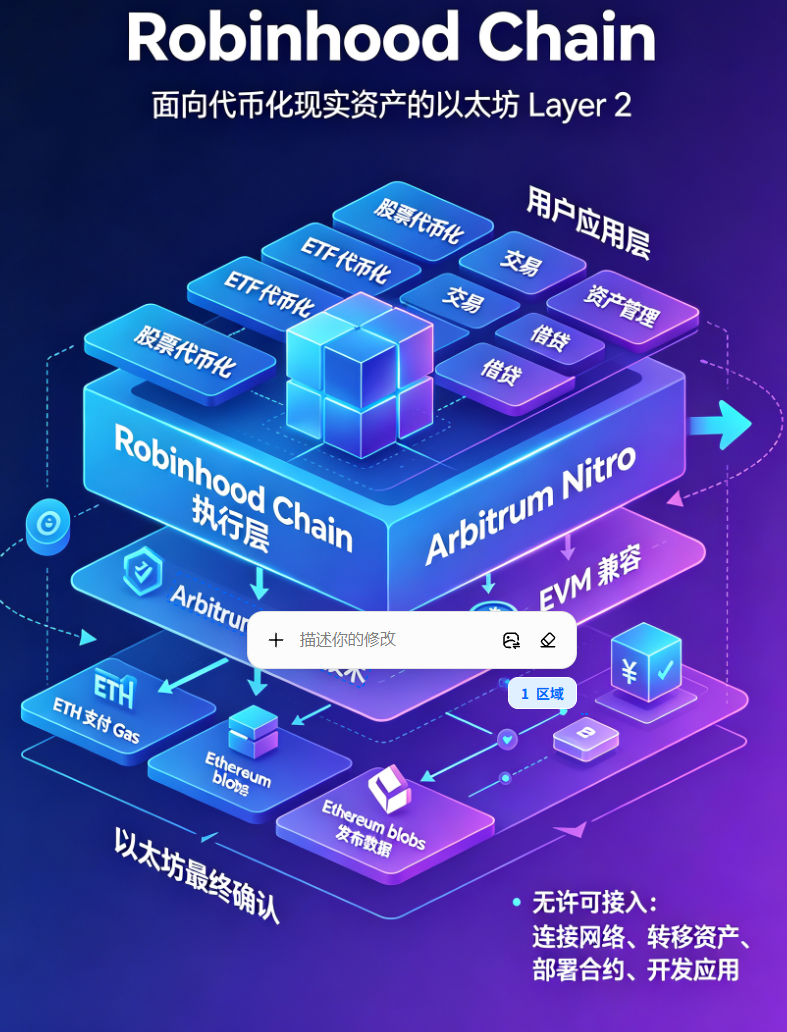
Robinhood Chain is not a completely new independent Layer 1 network, but an Ethereum Layer 2 built using Arbitrum Nitro technology. Its key design is: transactions are executed on Robinhood Chain, data is posted to Ethereum via Ethereum blobs, final state is confirmed by Ethereum, and it is fully compatible with the Ethereum Virtual Machine (EVM). This means developers can seamlessly migrate existing Solidity contracts. The network uses ETH as the gas token, achieving deep integration with the Ethereum ecosystem.
Robinhood defines this network as a "permissionless" blockchain, allowing anyone to access, deploy applications, or transfer assets without holding a Robinhood brokerage account. However, this "permissionless" nature is mainly focused on the user and developer level. In terms of core infrastructure control, Robinhood currently still operates the sequencer and conducts compliance screening for transactions; validators are also permissioned, run by institutions such as Offchain Labs and Alchemy. This positioning means that Robinhood Chain is a network that is open to users but relatively centralized in core governance and infrastructure control.
2. Technology and Positioning: Differentiated Track from Arbitrum and Base
From a technical perspective, Robinhood Chain runs Arbitrum Nitro and adopts the BoLD dispute resolution mechanism. It is an independent network separate from Arbitrum One and Nova. Its technical highlights include: extremely fast block time of approximately 100 milliseconds, first-come-first-served transaction ordering (no reliance on priority fees), native support for ERC-4337 account abstraction, and compliance screening at the sequencer level.
Compared to the more general-purpose Base chain based on OP Stack, or the more versatile Arbitrum One, Robinhood Chain's differentiated advantage lies in its clear vertical positioning - focusing on stock tokens, real-world assets, and on-chain financial applications. Its governance structure also reflects this: a Security Council composed of 8 seats including Robinhood, BitGo, Chainlink Labs, etc., jointly assumes network governance responsibilities, reflecting the compliance and stability requirements needed for financial applications.
3. Core Product: Stock Tokens - Stocks, But Not Stocks
One of Robinhood Chain's core products is Stock Tokens. The official statement clearly states that Stock Tokens are tokenized debt securities issued by Robinhood Assets (Jersey) Limited, providing users with economic exposure to stocks such as Apple and Nvidia, but holders do not directly own the underlying securities and do not have shareholder voting rights. In effect, this is an on-chain product that offers economic exposure to stocks in the form of debt securities.
Stock Tokens are standard ERC-20 tokens that can be held in self-custody wallets, transferred, and integrated into various DeFi lending or trading applications. Chainlink provides on-chain price data, and Robinhood handles corporate actions such as dividends and stock splits through an on-chain multiplier mechanism. Although it enables 24/7 on-chain trading, liquidity, spreads, and the risk of price deviations increase significantly during US stock market trading halts.
4. Ecosystem Status and Challenges: Meme-Driven Boom and Early RWA Challenges
Since its mainnet launch, Robinhood Chain has grown rapidly. As of mid-July 2026, its on-chain stablecoin scale is approximately $300 million, stock token scale is about $13 million, and over 65,000 users hold tokens. However, this data reveals a deeper structural issue: early trading volume is primarily driven by Meme coins (such as CASHCAT), while the RWA applications that the official has high hopes for - stock tokens - have a scale far smaller than Meme coin speculative trading. This reflects that the early hype has not yet effectively translated into actual demand for RWA usage.
Robinhood Chain's advantages include a huge existing user base, strong product distribution capabilities, stable stock token supply, and mature infrastructure from partners like Uniswap, Morpho, and Chainlink. However, it still faces significant risks: trading volume reliance on Meme coin speculation, limited stock token scale with single use cases, issuer and regulatory risks of Stock Tokens, and the centralization characteristics of its sequencer and validator mechanisms.
Conclusion: A Fusion Experiment of Traditional and Crypto
Robinhood Chain is a major strategic attempt by Robinhood to connect traditional brokerage businesses, tokenized securities, and decentralized finance. In the short term, its on-chain heat is mainly driven by Meme coins, stablecoins, and DeFi speculative activities; whether it can truly build a genuine RWA market in the long run depends on the establishment of stock token liquidity, regulatory progress, developer ecosystem development, and sustained usage demand from ordinary users. This is a complex experiment testing platform integration capabilities, compliance boundaries, and market sentiment. Its success or failure will profoundly impact the future direction of the convergence between traditional finance and the cryptocurrency world.
The on-chain data in this article are as of mid-July 2026, and relevant indicators may change rapidly with market activities.
Copyright Notice: This article isTailan Global Finance AgencyOriginal content, please contact us for authorization to reproduce.