

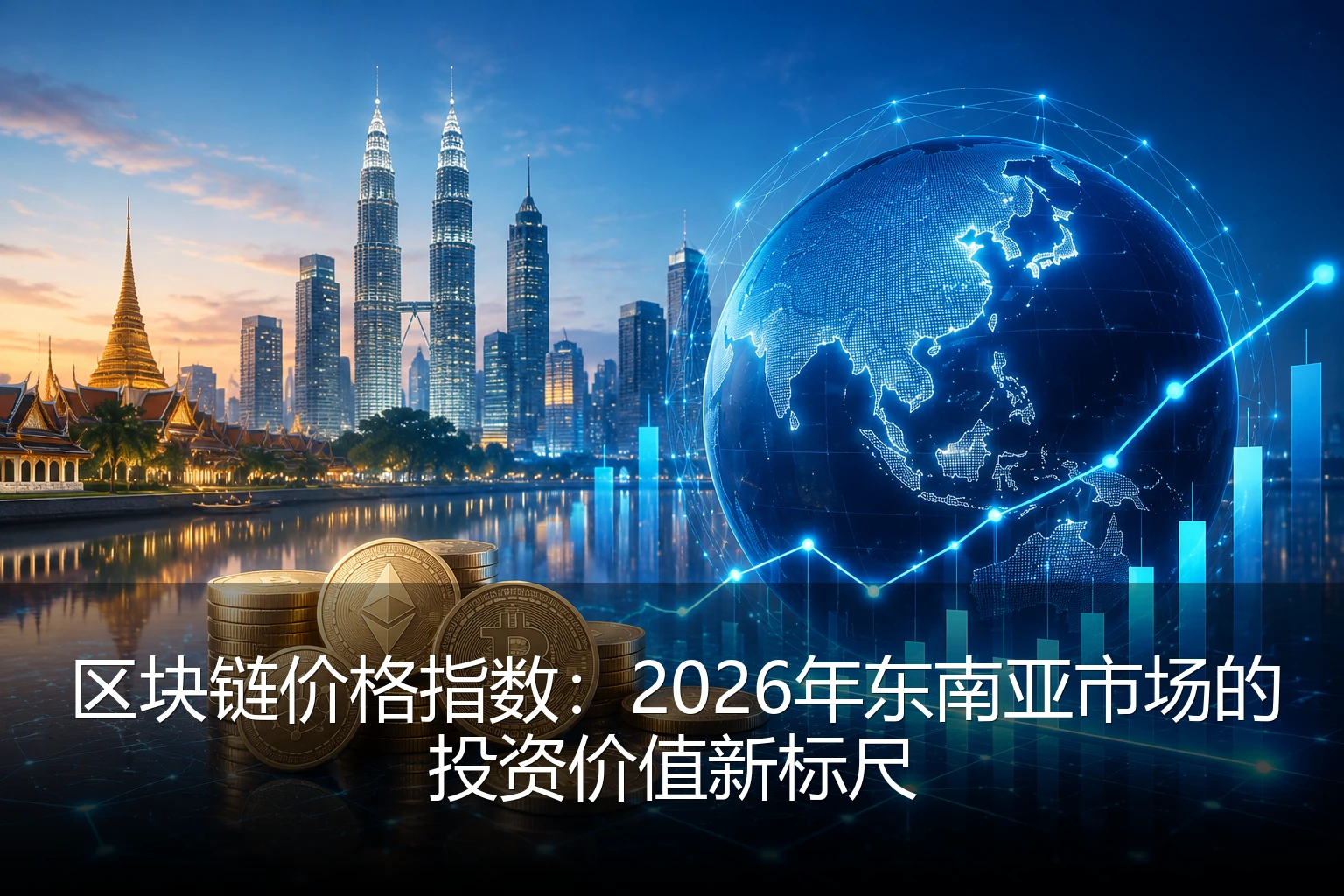
Blockchain Price Index: A New Benchmark for Investment Value in the 2026 Southeast Asian Market
In today's rapidly developing digital economy, blockchain technology has become one of the most revolutionary innovations in the global FinTech sector. As a crucial tool for measuring the value and market performance of digital assets, the blockchain price index not only reflects the overall trend of the cryptocurrency market but has also become a key reference for investors to assess the investment value of blockchain technology. In 2026, Southeast Asia is gradually emerging as a new hotbed for global blockchain investment due to its unique market environment and development potential. This article will deeply explore how the blockchain price index is becoming a new benchmark for investment value in the Southeast Asian market, providing valuable references for investors.
Blockchain Price Index: Concept and Significance
The blockchain price index is a comprehensive price indicator derived from a weighted calculation of a series of representative digital assets. These indices typically include mainstream cryptocurrencies such as Bitcoin and Ethereum, as well as representative DeFi tokens and NFT-related assets. Similar to traditional financial markets, the blockchain price index provides investors with a "barometer" to measure the overall performance of the blockchain market.
In 2026, as blockchain technology continues to mature and its application scenarios expand, the blockchain price index has transcended mere price reflection to become an important indicator for assessing the healthy development of the blockchain ecosystem. By analyzing the index composition, weight distribution, and volatility characteristics, investors can gain insights into market sentiment, technological development trends, and the investment value across different application fields.
In the Southeast Asian market, the compilation and application of the blockchain price index exhibit unique characteristics. Index-compiling institutions in the region place greater emphasis on incorporating local characteristic digital assets into the index system while fully considering the impact of regulatory policy changes on the market. This localized index design allows the blockchain price index to better reflect the true investment value of the Southeast Asian market.
Current Status of the Blockchain Market in Southeast Asia
Southeast Asia has become a cutting-edge area for global blockchain development. According to the latest 2026 data, the annual growth rate of the blockchain market in the region exceeds 35%, far surpassing the global average. Countries such as Singapore, Thailand, and Vietnam have successively introduced proactive blockchain regulations, providing a favorable environment for industry development.
Thailand, as a leader in Southeast Asian blockchain development, has an increasingly refined regulatory framework. The Thai Securities and Exchange Commission (SEC) has approved the legitimate operation of multiple digital asset exchanges and has introduced tax incentive policies for digital asset investment. These policies have greatly attracted the attention of international investors, promoting the prosperous development of the blockchain market in the region.
Singapore, with its mature financial system and status as an international financial center, has become an important hub for blockchain enterprises. The "Payment Services Act" introduced by the Monetary Authority of Singapore (MAS) provides a clear legal framework for digital payments and blockchain applications, attracting numerous blockchain innovation companies to settle there.
Blockchain markets in countries like Vietnam and Malaysia are also showing rapid growth. Governments in these countries recognize the immense potential of blockchain technology in enhancing financial inclusion and promoting economic development, and they have all introduced supporting policies to encourage the application of blockchain technology in finance, supply chain, and healthcare.
Investment Reference Value of the Blockchain Price Index
Blockchain price indices hold multifaceted reference value as an investment tool. First, indexed investing effectively diversifies risk, mitigating the impact of single digital asset volatility on a portfolio. By tracking the blockchain price index, investors can achieve broad market participation, avoiding the judgment risk associated with selecting specific digital assets. Second, the blockchain price index reflects the market's overall assessment of the value of blockchain technology. The trend of the index's rise and fall often precedes the performance of individual digital assets, providing investors with crucial market signals. For instance, a sustained upward trend in the blockchain price index usually signifies an optimistic market view of the long-term value of blockchain technology, potentially foreshadowing the emergence of related investment opportunities. Third, the blockchain price index offers investors a window to assess the development status of different application areas of blockchain technology. By analyzing the performance of various sub-indices, investors can identify the most promising application domains for investment. For example, the relative performance of DeFi indices, NFT indices, and Layer2 scaling solutions indices reflects the market's preferences and expectations for different blockchain application sectors. In the Southeast Asian market, the blockchain price index also holds significant localized reference value. Local index providers typically fully consider regional characteristics and policy factors, making the index a more accurate reflection of the actual investment environment in Southeast Asia. Investors can better grasp regional market opportunities and risks by studying these local indices. ### Risks and Opportunities in Blockchain Investment Despite the vast prospects of blockchain investment, investors must be clearly aware of the inherent risks. First, the blockchain market is highly volatile; the price index may experience sharp fluctuations in the short term, posing a challenge to investors' psychological resilience. Second, regulatory uncertainty remains one of the primary risks in blockchain investment. Different countries and regions have varying attitudes toward the regulation of blockchain and cryptocurrencies, and policy changes can significantly impact the market. Third, technological risks cannot be overlooked. Blockchain technology is still in a rapid development phase, and issues such as technology roadmap selection, security vulnerabilities, and governance mechanisms can affect investment value. Furthermore, risks such as market manipulation and fraud require high vigilance from investors. However, risks and opportunities coexist. In the Southeast Asian market, blockchain investment faces numerous opportunities. First, the rapid development of the regional digital economy provides a vast space for blockchain applications. From cross-border payments to supply chain management, and from digital identity to asset tokenization, the application scenarios of blockchain technology are continuously expanding, offering rich investment opportunities. Second, Southeast Asian countries generally prioritize the development of financial technology, with strong government support. Policies such as the digital asset tax incentives introduced by Thailand and the sandbox regulatory mechanism in Singapore have created a favorable environment for blockchain investment. These policies not only reduce investment costs but also enhance market transparency and standardization. Third, the region has a large young population and high internet penetration, leading to high acceptance of digital assets. This characteristic provides a solid social foundation for the promotion and application of blockchain technology in the region and creates favorable conditions for related investments. ### Future Development Trends and Investment Strategies Looking ahead, the Southeast Asian blockchain market is expected to show the following development trends. First, the regulatory framework will be further refined, leading to increased market standardization. With the accumulation of regulatory experience across countries and advancements in regulatory technology, the oversight of the blockchain market will become more precise and effective, creating a stable environment for long-term investment. Second, blockchain application scenarios will continuously expand, permeating more industries beyond finance. Breakthroughs are expected in applications such as supply chain management, healthcare, and real estate, offering investors more diversified investment choices. Third, the participation of institutional investors will increase. As the blockchain market matures and regulation improves, more traditional financial institutions will enter this field, driving the market toward greater professionalism and standardization. Based on these trends, investors can adopt the following strategies to seize blockchain investment opportunities. First, adopt a long-term investment perspective, focusing on the long-term value of blockchain technology rather than short-term price fluctuations. Blockchain technology is still in its early stages of development and holds immense growth potential in the long run. Second, focus on blockchain projects with actual application scenarios, avoiding purely speculative behavior. Projects with clear use cases and business models have more reliable long-term value and relatively lower investment risk. Third, diversify investments to reduce single-asset risk. By investing in various blockchain assets or tracking blockchain price indices, risks can be effectively diversified, improving portfolio stability. Finally, continuously learn and track industry developments to enhance the scientific basis of investment decisions. Blockchain technology evolves rapidly, and the market environment is constantly changing; investors must maintain a learning attitude and adjust their investment strategies in a timely manner. Conclusion. The blockchain price index, as a vital tool for measuring blockchain market performance, has become a key reference for investors to assess blockchain investment value. In the Southeast Asian market, with the rapid development of blockchain technology and the continuous refinement of the regulatory environment, blockchain investment is ushering in unprecedented opportunities. Investors should fully recognize the risks and opportunities associated with blockchain investment, adopting scientific investment strategies to control risks reasonably while capturing long-term value. By deeply understanding the significance and application of the blockchain price index, combined with the characteristics of the Southeast Asian market, investors can better seize investment opportunities in this emerging field and achieve steady wealth growth. As blockchain technology continues to mature and application scenarios continuously expand, Southeast Asia is poised to become a major engine for global blockchain investment. The blockchain price index, as a new benchmark for investment value, will continue to play an important role, guiding investors to seize the initiative in the digital economy era and create a shared future.
Copyright Notice: This article isTailan Global Finance AgencyOriginal content, please contact us for authorization to reproduce.