
Title: Asian Markets Rally on Chip Sector Optimism: SK Hynix’s U.S. Listing and Micron’s Stellar Earnings
Keywords: Asian markets, chip stocks, SK Hynix, ADR, Micron Technology, AI memory, market rally, KOSPI, circuit breaker
Introduction
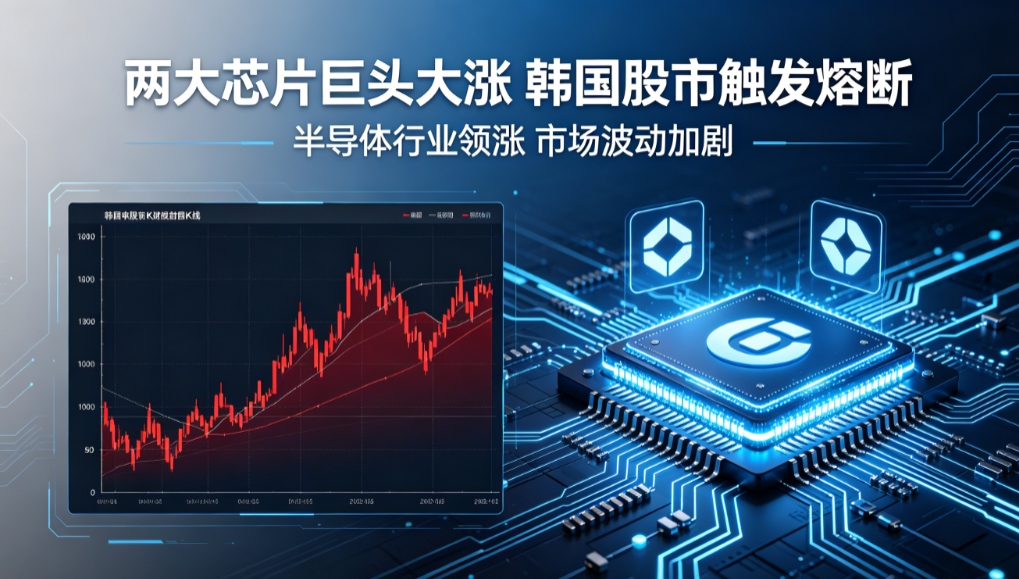
On the morning of June 25, Asian equity markets opened with robust gains, led by a sharp rally in Japanese and South Korean indices. The Nikkei 225 surged 2.32% while the Korea Composite Stock Price Index (KOSPI) jumped an impressive 5.51% as of 8:06 Beijing time. The primary catalyst behind this surge was overwhelmingly positive news from the global semiconductor industry, particularly from memory chip giants SK Hynix and Micron Technology. The market’s reaction underscores the deepening influence of artificial intelligence (AI) on memory demand and the increasing integration of global capital markets. This article delves into the details of the day’s events, examines the strategic moves by key players, and assesses the broader implications for the semiconductor landscape.
Korea’s Market Surge and Circuit Breaker Activation
South Korea’s benchmark index saw its largest intraday gain in months, driven by a wave of buying in heavyweight tech stocks. The rally was so intense that the Korea Exchange activated a circuit breaker for the KOSPI 200 Index futures after the contract rose 5%, triggering a mandatory five-minute halt in program trading. This mechanism, designed to curb excessive volatility, was a clear signal of the market’s overwhelming bullish sentiment.
The spotlight was firmly on South Korea’s two largest chipmakers. SK Hynix soared approximately 11%, while Samsung Electronics climbed over 5%. Their gains were fueled by two major events: a landmark capital raising plan by SK Hynix in the United States and an extraordinary earnings report from U.S. memory maker Micron Technology, which sent shockwaves through the global chip sector.
SK Hynix’s Landmark ADR Issuance: A Bridge to Global Investors
On June 24, SK Hynix submitted a statutory disclosure to South Korea’s Financial Supervisory Service (DART system), announcing its intention to issue American Depositary Receipts (ADRs) worth 45.45 trillion Korean won—approximately $294.3 billion. The ADRs are expected to begin trading on the Nasdaq Stock Market on July 10. This massive offering, one of the largest by a Korean company in the U.S., is designed to achieve multiple strategic objectives.
First, it expands SK Hynix’s global investor base, allowing international institutional and retail investors easier access to its equity. Second, and more critically, the proceeds will be deployed to accelerate capacity expansion for High Bandwidth Memory (HBM), a key component in AI accelerators. SK Hynix plans to allocate funds toward its Yongin semiconductor cluster, the Cheongju advanced packaging facility, and general R&D. This move underscores the company’s aggressive bet on AI-driven memory demand, which has emerged as the most lucrative segment in the memory market. The ADR issuance also provides SK Hynix with a dollar-denominated funding source, reducing currency risk and enhancing its financial flexibility for global operations.
Micron’s Blockbuster Results: A Catalyst for the Sector
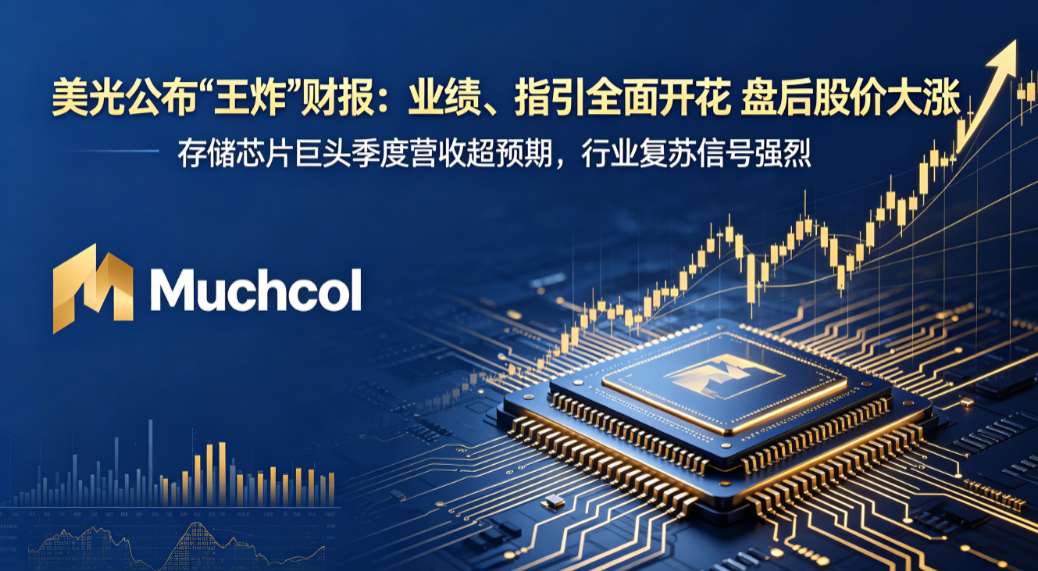
While SK Hynix’s ADR news dominated the Asian session, the immediate catalyst for the rally was the after-hours earnings release from U.S. memory giant Micron Technology. Micron reported fiscal third-quarter results for the period ending May 31, 2024, that far exceeded consensus expectations. Revenue surged approximately 346% year-over-year to $414.6 billion—a figure that reflects not only the cyclical recovery but also the massive demand uplift from AI data centers. On a non-GAAP basis, adjusted earnings per share (EPS) skyrocketed more than twelve-fold to $25.11.
Even more striking was Micron’s guidance for the fourth fiscal quarter. The company projected adjusted revenue in the range of $490 billion to $510 billion, compared to the analyst consensus of $432.4 billion. This guidance signaled that the AI-driven demand wave is far from peaking. In after-hours trading, Micron’s stock initially surged as much as 16%, though it later pared some gains. The news also boosted other chip stocks, including Qualcomm (which rose over 3% before giving back gains) and shares of other memory-related firms.
Wall Street’s Mixed Reaction and Broader Semiconductor Context
It is worth noting that on the same day (June 24), the broader U.S. stock market was mixed. The three major indices ended the session with minor changes, and the Philadelphia Semiconductor Index slipped 0.18%. Several chip names underperformed: Qualcomm fell over 3%, while Lattice Semiconductor, Skyworks Solutions, Qorvo, and ARM all declined by 2% or more. However, these losses were overshadowed by the after-hours rally triggered by Micron’s release. The market’s bifurcation highlights that fundamentals—especially those tied to AI and memory—are diverging from the broader chip sector, which still faces inventory corrections and demand uncertainty in non-AI end markets.
Implications for AI Memory and Global Capital Flows
The events of June 24–25 reinforce a central theme in the semiconductor industry: memory chips, particularly HBM, are the new battleground for AI supremacy. SK Hynix’s ADR listing is not merely a fundraising exercise; it is a strategic pivot to lock in long-term capital and technology partnerships with U.S. hyperscalers such as NVIDIA, AMD, and cloud providers. By listing on Nasdaq, SK Hynix positions itself alongside leading U.S. tech firms, enhancing its visibility and credibility with AI-focused investors.
Simultaneously, Micron’s extraordinary results validate that the memory cycle has entered a structural upswing driven by AI inference and training workloads. The company’s guidance of nearly $500 billion in quarterly revenue implies an annualized run rate approaching $2 trillion—a figure that would have been unthinkable just two years ago. This growth is almost entirely attributable to HBM and high-capacity DRAM used in AI servers.
For South Korea, the rally in the KOSPI and the activation of the circuit breaker are symptomatic of a market that is overexposed to a single sector. While the near-term outlook remains bright, the concentration risk is real. If AI memory demand moderates or if geopolitical tensions disrupt supply chains, the Korean market could experience sharp corrections. However, for now, the narrative is overwhelmingly positive.
Conclusion
The sharp gains in Japanese and Korean equity markets on June 25 are a testament to the power of semiconductor-driven momentum. SK Hynix’s ambitious ADR offering, combined with Micron’s blowout earnings, has injected a fresh wave of optimism into the global chip trade. As AI continues to reshape the technology landscape, memory makers are positioned as critical enablers. Investors are betting that these companies will not only ride the current wave but also lead the next phase of innovation. While volatility remains a concern—as evidenced by the circuit breaker in Seoul—the fundamental case for AI memory has never been stronger. The coming weeks, particularly with SK Hynix’s Nasdaq debut, will be closely watched as a bellwether for the sector’s trajectory in the second half of 2024.
Copyright Notice: This article is original content of Dhaka Bullion. Please contact us for republication permission.